From pretty pictures to a business with a purpose
I swapped a $100,000-plus government salary for a $200 bank balance. That's what was left after I put $50,000 of my savings into Beach Shack Productions and moved to a town of fewer than 5,000 people.
Rowen Franklin
Founder & Strategic Director, Beach Shack Productions
I swapped a $100,000-plus government salary for a $200 bank balance. That's what was left after I put $50,000 of my savings into Beach Shack Productions and moved to a town of fewer than 5,000 people.
Everyone thought I was crazy. Honestly, I had my own doubts. Three years later, I'm on track to surpass that old salary. Here's what changed.
I thought I was starting a video production company.
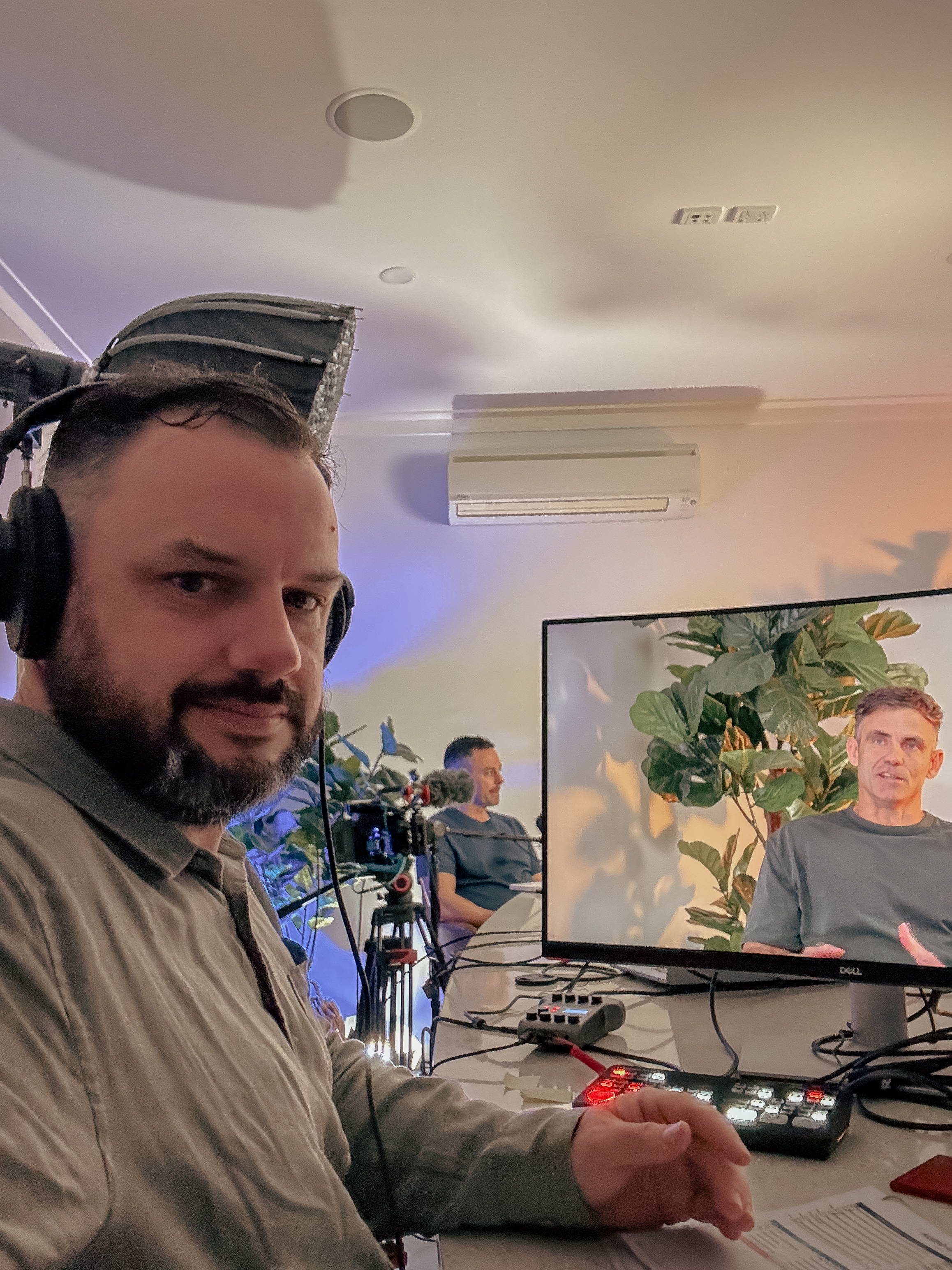
I wanted to be the best from day one, so I obsessed over the pictures.
Along the way, I've become the off-camera producer of Talk To Me with Charlie McCarron. I run the pre-interview calls and do the deep research before each conversation. The guests include CEOs, Olympians, entrepreneurs, coaches, speakers and sports stars. It lets me get past the achievements people are known for, and sometimes what I hear sends me back to look at my own business.
One recent guest was Dan Withers, a two-time Touch Football World Cup winner with Australia (2011 and 2015) and the founder, owner and head coach of VidaFit Rockhampton. His career has run through elite sport, real estate and building a fitness business.
On the show, Dan tells a story about not being able to afford a $26 chicken parmigiana after pouring his money into his business.
I know that feeling. I know what it's like to back something with your own savings and be left with very little.
That moment proved something to me. I'm not on this path alone. Countless entrepreneurs have put their savings on the line, watched the account run close to empty, and kept going. Hearing it from someone who has built a fitness business made my own low point feel less like a mistake and more like part of the journey.
02 — Beyond the PicturesBut I soon learned that calling myself a video production company was too narrow.
I needed to understand marketing and sales, both for my own business and for the clients paying me to make their videos.
When I shifted my focus, my life got considerably better.
I had to understand what each video was for. I learned how sales funnels work and what different kinds of content are meant to do: brand films, video sales letters, testimonials, documentaries and social videos. They can all be valuable, but they do different jobs depending on where someone is in their relationship with a business.
Someone who has never heard of you needs something different from someone almost ready to book a call. A testimonial can settle a concern. A brand film can show who they'd be working with. A longer conversation or documentary can give them the depth they need to decide.
The better I understood that, the more useful my work became. Now I ask what a video needs to do before I decide what it should look like.
03 — The Real JourneyCustomers don't always follow the funnel we draw.
These days I see people click a Meta ad, visit the website, go back and like three or four older organic posts, then use the link in the bio to book a call. That's hardly a straight line.
It's changed how I think about the content around a business. I want a connected network of useful pieces, with room for people to find their own way through. Each piece should tell part of the story, answer a question or make the next step easier.
An older post can still be working. A website can give someone a reason to look more closely at the people behind the business. A video can answer a question they weren't ready to ask when they first saw the ad. That's why I look at the whole journey rather than treating each video as a separate job.
I also had to charge properly.
Charging what my work is worth has been central to turning the business around. Wanting to be excellent from the start didn't remove the need to build a business that could support the work.
I recently spoke with author Andrew Griffiths on a producer call and connected with his message straight away. I'll write more about that in a later post.
04 — What I'm Working TowardsMy ambition is to build an enjoyable, profitable lifestyle business.
Revenue of $1 million-plus, and to help clients build businesses that give them that same mix of income and enjoyment. Surpassing my old salary is a milestone on the way. The revenue target is only one part of it.
Profitability, work I care about and enjoying the business I run matter just as much. That gives me a reason to keep learning about sales, marketing, pricing and the processes behind production. The business has to work beyond the next finished film.
Dan's story reminded me that I'm far from the first person to walk this path, and I won't be the last.
It also takes me back to the gap between being good at your craft and knowing how to build a business around it. The pictures still matter to me. Now I want to know where they belong in the customer's journey, why they're being made and how they serve the kind of business the owner actually wants.